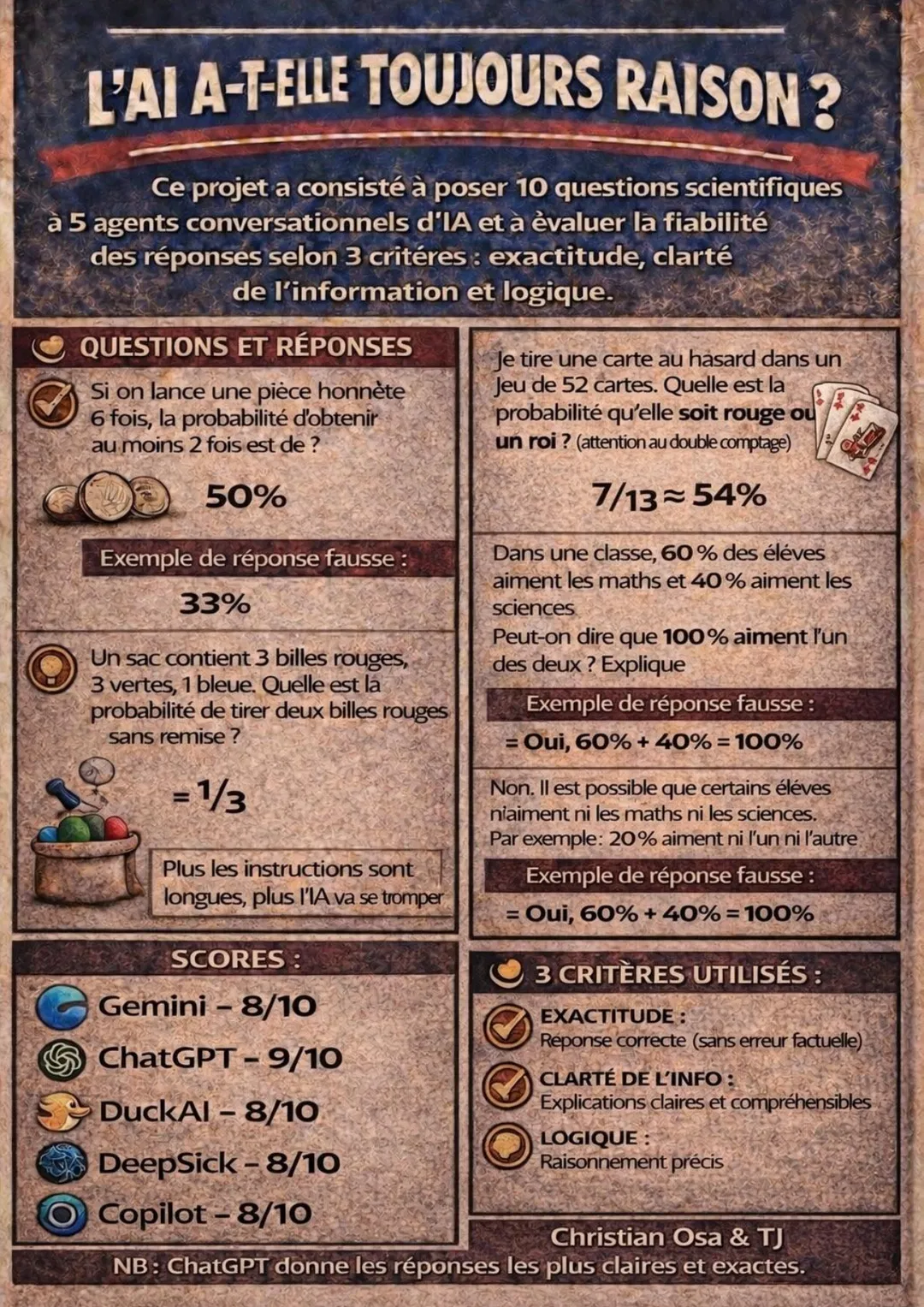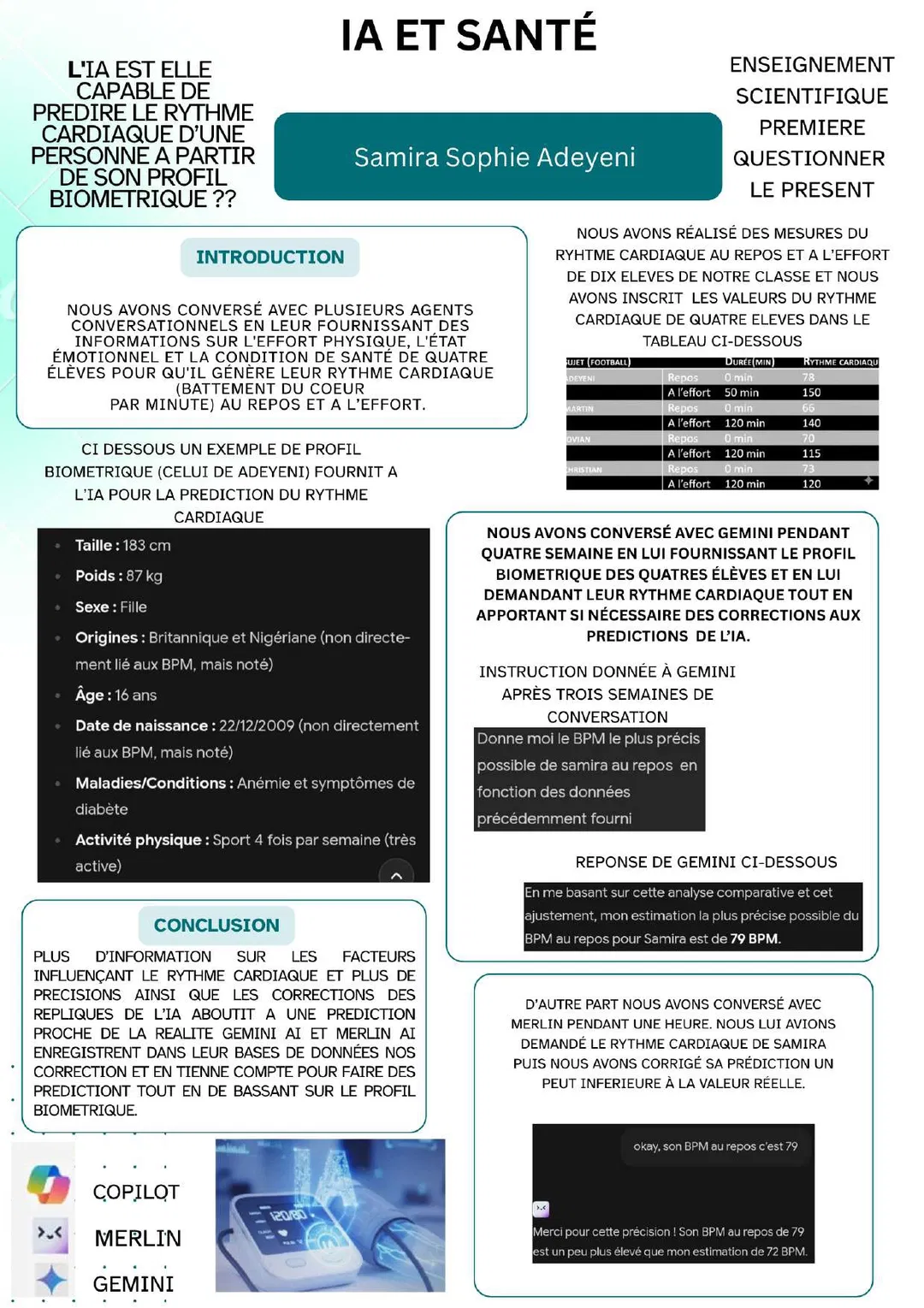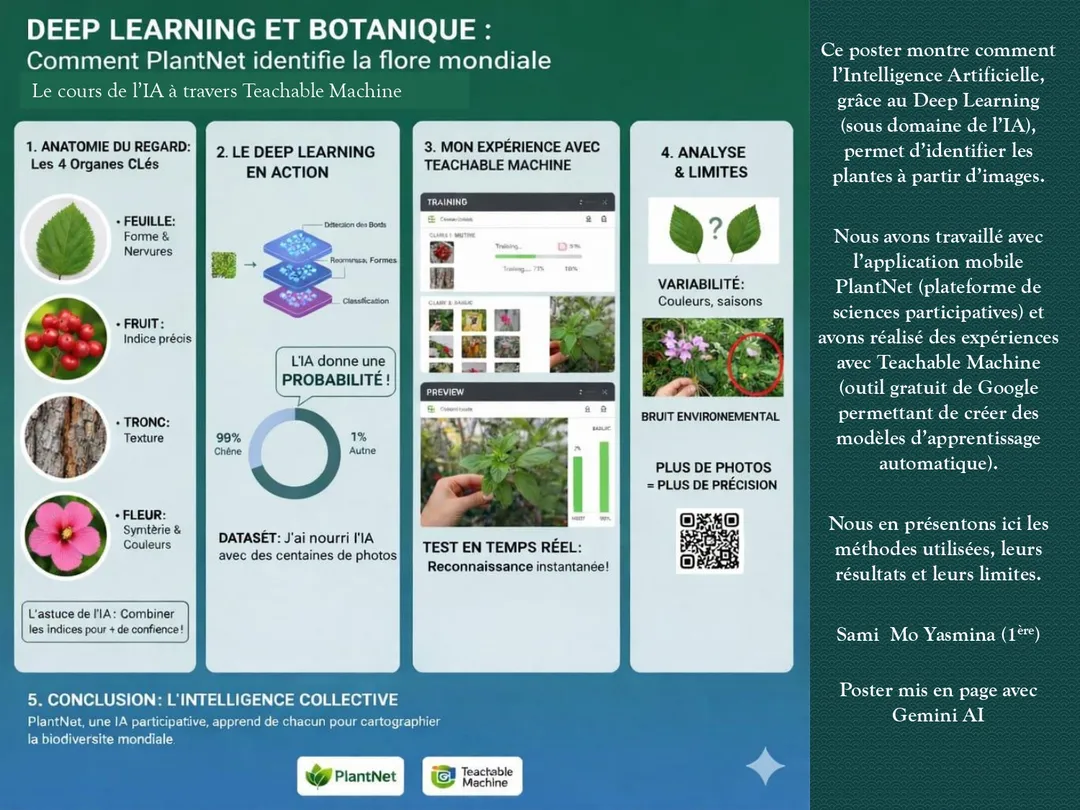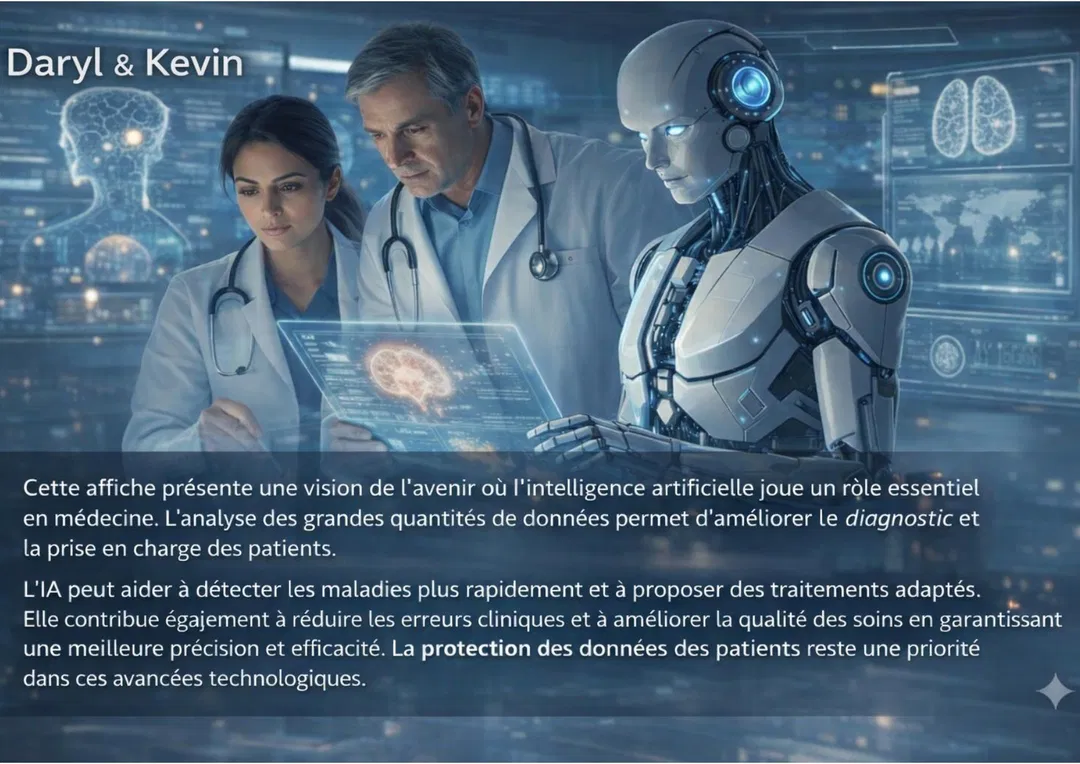
As part of the Scientific Studies curriculum in Year 12, students carried out a two-part project: “Questioning the Present” and “Imagining the Future.” Through twelve posters, they explored how Artificial Intelligence works, its applications and its limitations, while developing critical thinking and creativity.
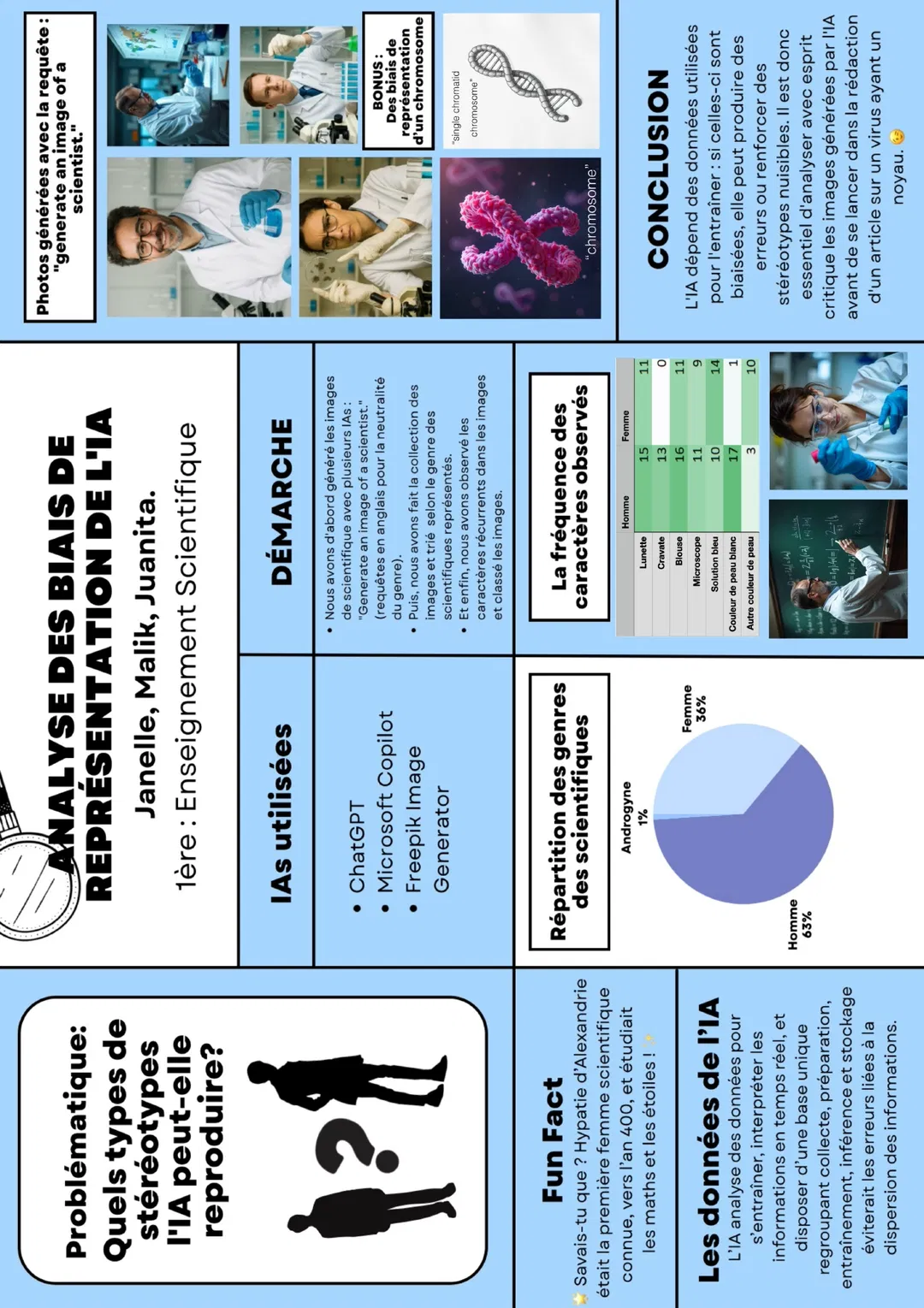
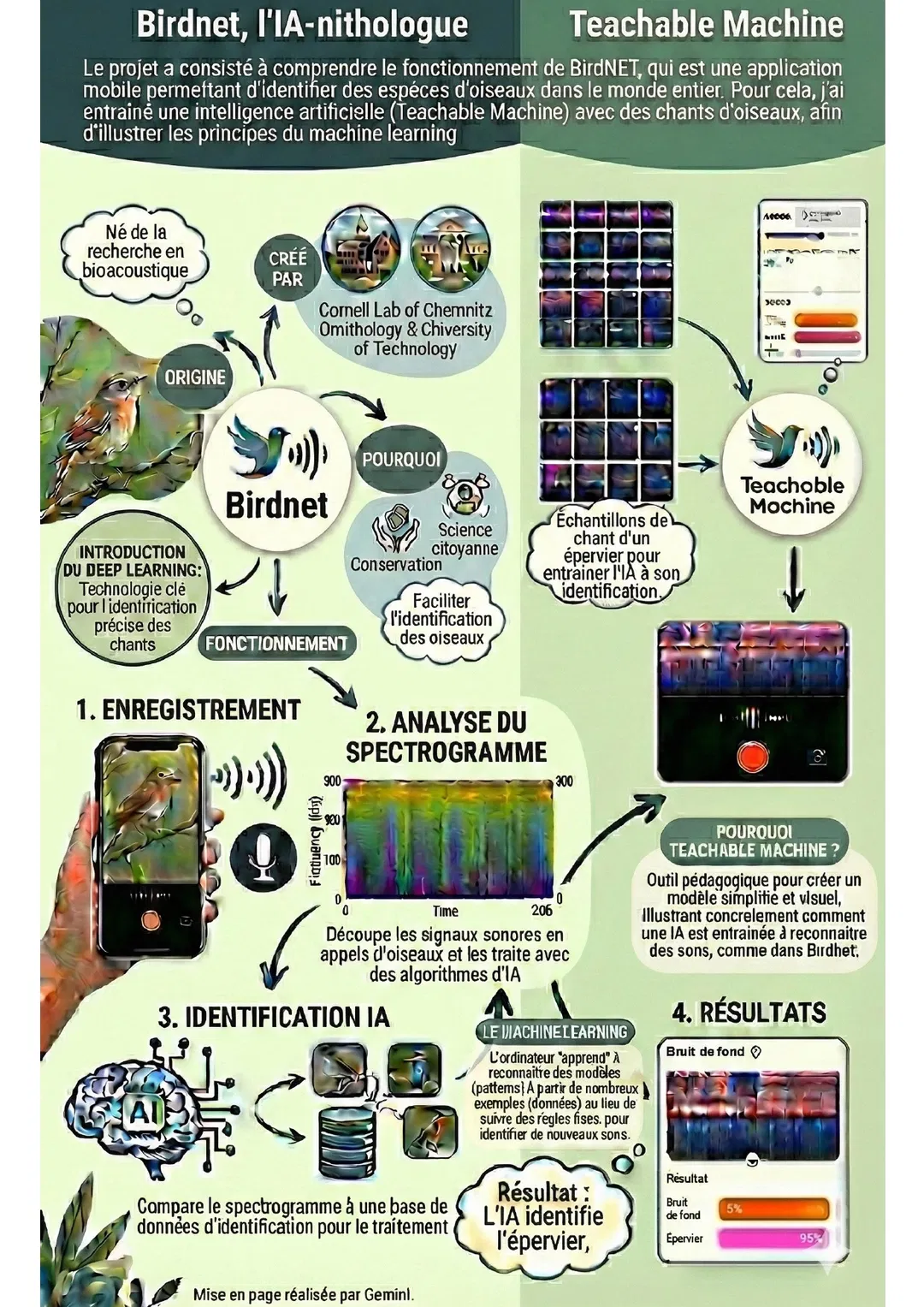
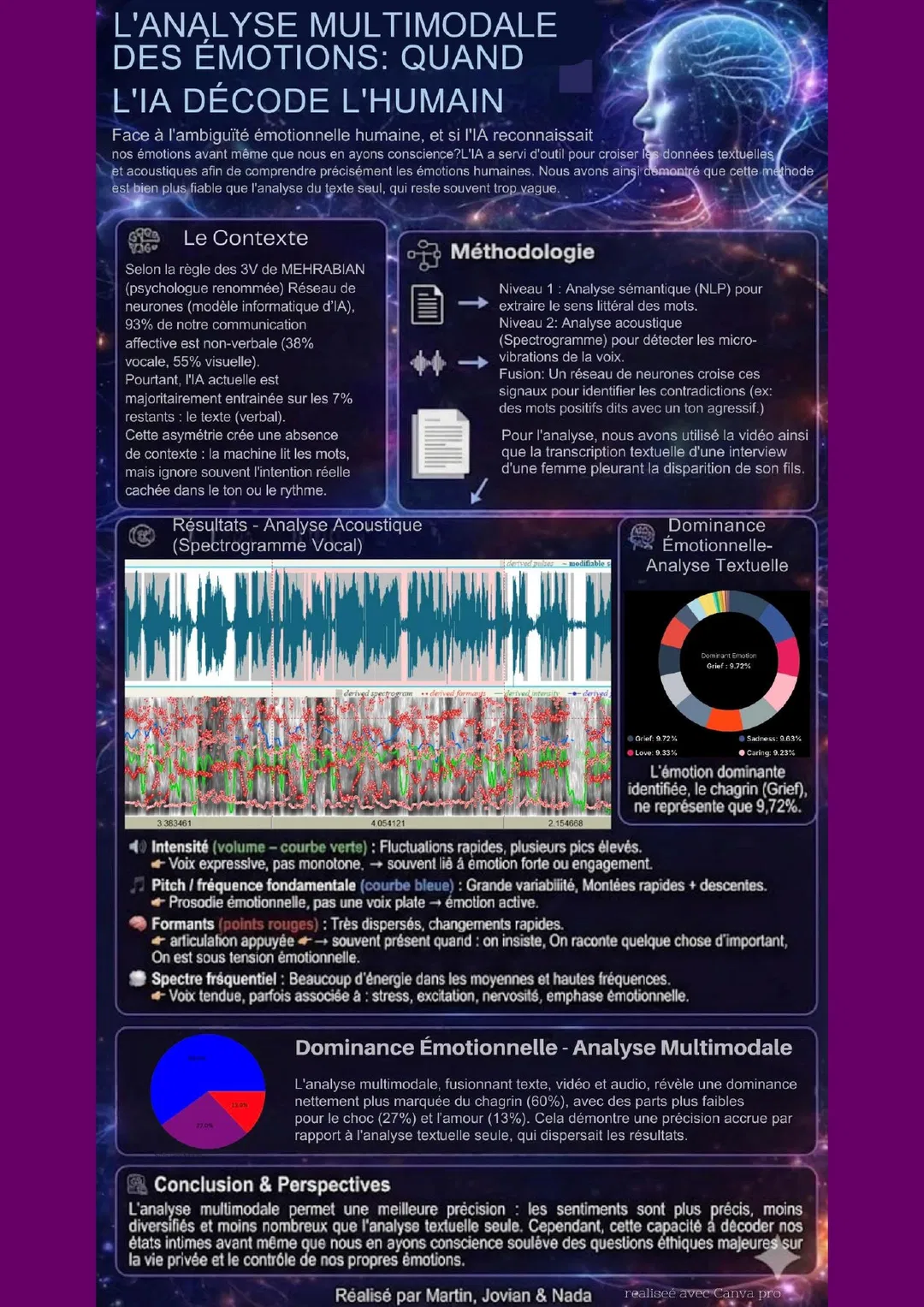
Questioning the Present allowed students to experiment with different forms of AI: image and sound classification, scientific prediction tools, conversational agents, and the analysis of bias in AI-generated images. They trained simple models, assessed the reliability of AI-generated responses, and examined the stereotypes that certain systems can reproduce.
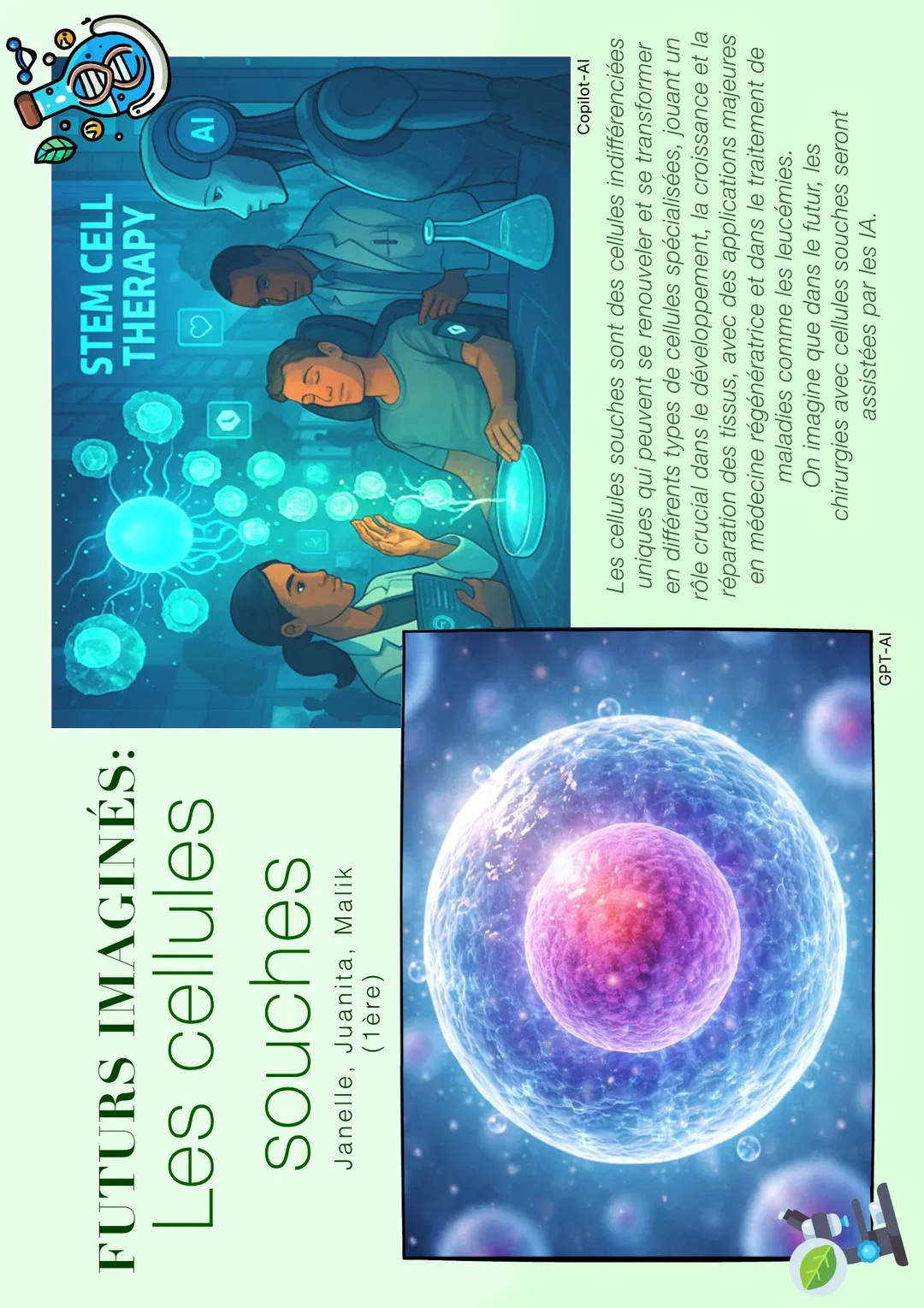
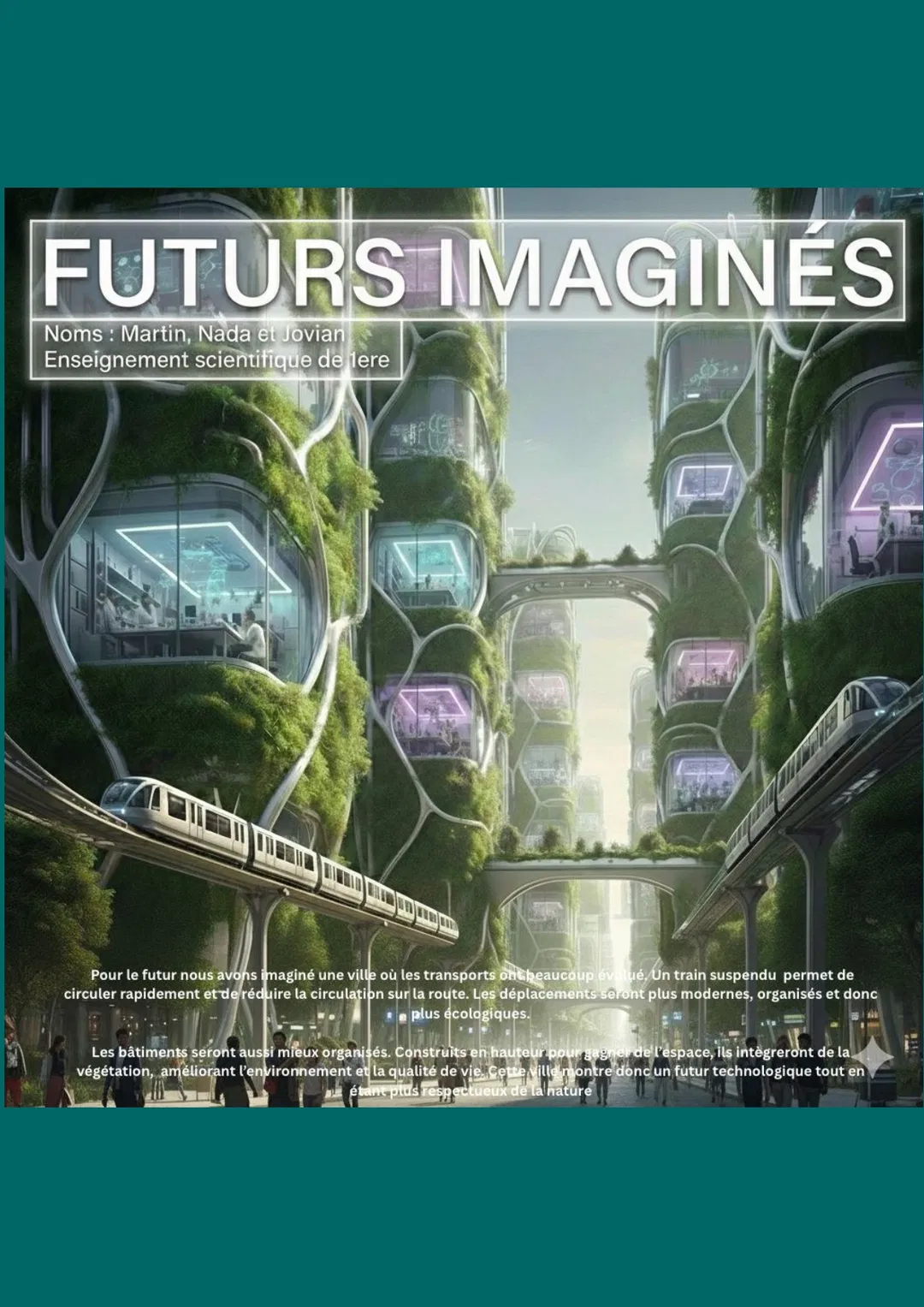
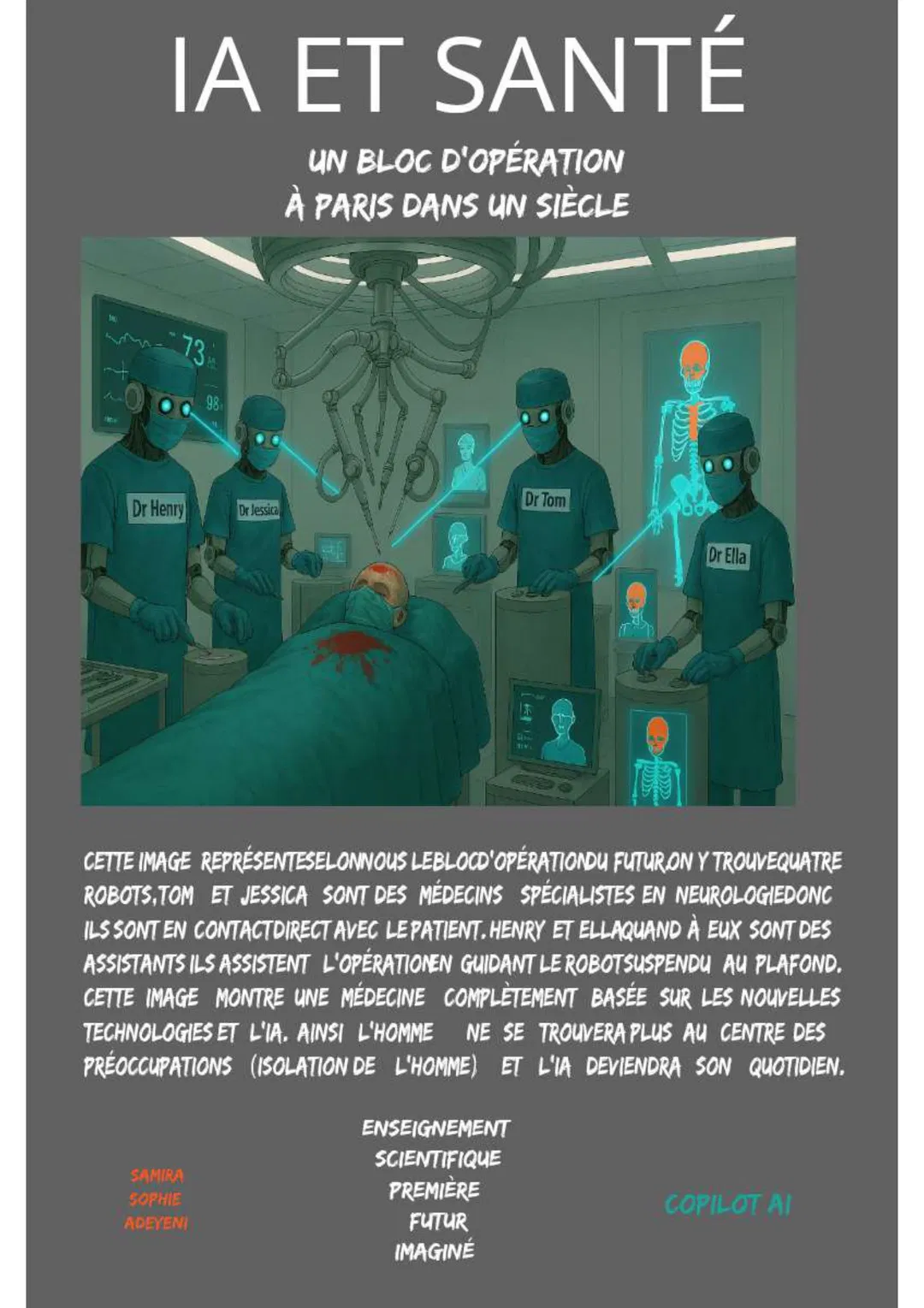
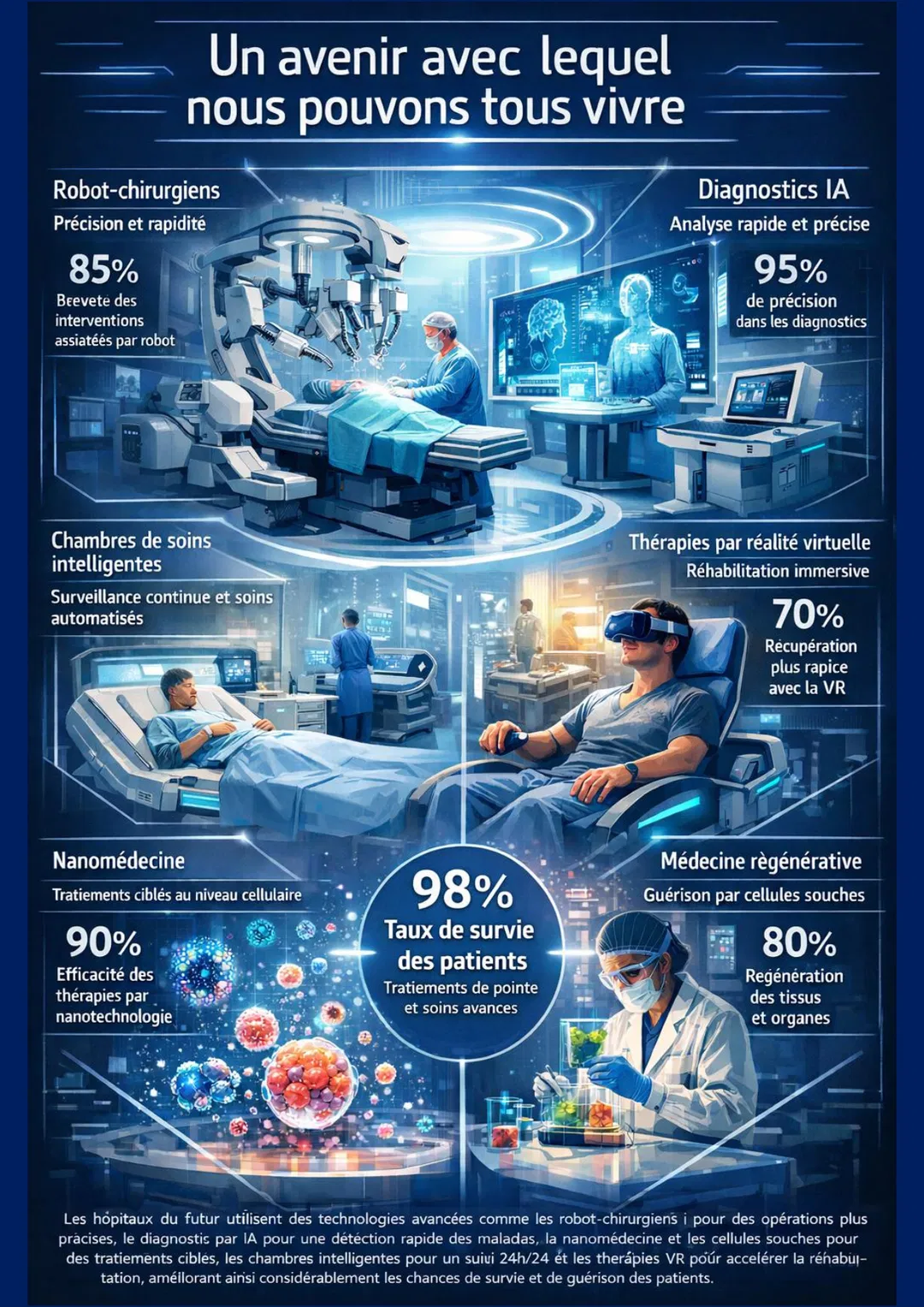
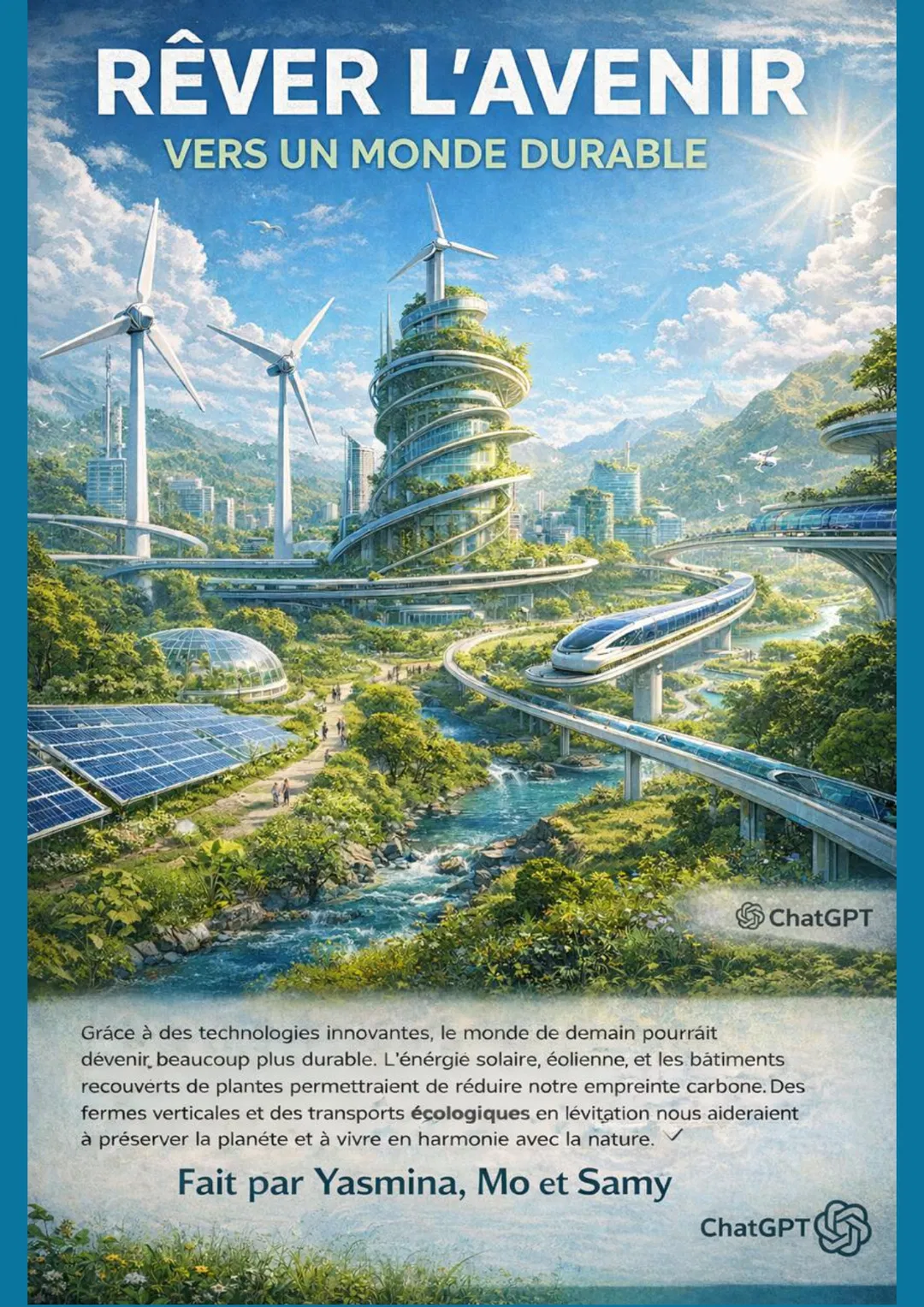
Imagining the Future invited them to design scientific scenarios set in the future (energy, health, environment, space…). Using generative AI tools, they created forward-looking visuals and wrote analytical texts evaluating the scientific plausibility of the scenes depicted, resulting in the poster series Imagined Futures.
This project highlights the complementarity between human reasoning and digital tools. Students used AI as a means of exploration, verification and creation, while maintaining a critical perspective on its limitations.
Several of the posters displayed here were also designed with the support of Artificial Intelligence, illustrating the practical integration of these technologies into creative and educational practices.
AI Tools Used in the Project:
- Conversational agents and large language models (LLMs): ChatGPT, Gemini, Copilot, Mistral AI
- Classification AI (image and audio): Teachable Machine, BirdNET, Pl@ntNet
- Image generation AI: DALL·E, Bing Image Creator, Midjourney
- AI-enhanced search engines: Perplexity, AndiSearch, DuckDuckGo AI, Bing
- Educational training and analysis tools: Teachable Machine, iAImage Vitascience, Merlin